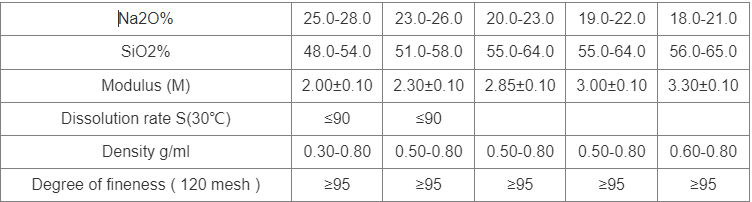
Technical Parameters of Powdered Instant Sodium Silicate (CAS 1344-09-8)

(Technical Parameters of Powdered Instant Sodium Silicate (CAS 1344-09-8))
Keep in mind: We can likewise tailor sodium silicate powder with moduli of 2.45, 2.5, and 3.4 according to your demands.
Our Range of Salt Silicate Moduli
We provide powdered split second salt silicate with moduli varying from 2.0 to 3.3. Additionally, we can personalize salt silicate powder with moduli of 2.45, 2.5, and 3.4 to fulfill your certain demands.
Intro
Among the intensifying worldwide concentrate on ecological conservation and sustainable advancement, salt silicate, a pivotal inorganic substance, is amassing heightened interest across diverse commercial domain names. Also called water glass or soluble glass, salt silicate is a functional inorganic compound. It not only plays a crucial role in the building and construction and paper sectors but is additionally an essential component in cleaning agent production. Recently, conventional phosphorus-containing detergent additives like sodium tripolyphosphate (STPP) have been eliminated because of their serious contamination of water bodies. Hence, journalism demand for effective and environment-friendly options has actually emerged. Versus this background, sodium silicate has gained substantial focus because of its distinct efficiency benefits.
Market Potential customer
1. Worldwide Demand
The worldwide production of synthetic cleaning agents is continuously expanding, with a raising share of extremely concentrated powders. It is approximated that a minimum of 230,000 lots of sodium silicate were required in the year 2000 alone to meet market need. Presently, the international production of salt silicate is restricted, leading to a considerable supply-demand void, which suggests substantial development possibility. As worldwide customers increasingly require top notch living standards, the need for environmentally friendly cleaning agents will additionally increase, better driving the development of the sodium silicate market.
2. International Competitiveness
Contrasted to a lot of worldwide equivalents, Chinese-produced sodium silicate not only supplies a significant price advantage but also boasts remarkable top quality, making it very competitive for export. For example, in the USA, the FOB rate for salt silicate is approximately $51.15 per 100 extra pounds, while costs in Europe are even greater; this makes Chinese-produced sodium silicate highly affordable in the international market. With continuous technological development and high quality enhancement, Chinese-produced salt silicate is poised to capture a bigger share of the global market.
Review of Salt Silicate
Salt silicate is a substance created from silicon dioxide (SiO ₂) and sodium oxide (Na ₂ O), normally represented by the formula Na ₂ O · nSiO ₂. Depending upon the value of n, various kinds can be classified. Salt silicate displays superb solubility, a high pH, and superior cleaning residential properties, making it an optimal detergent additive. Past its use in detergents, sodium silicate is widely used in the construction market as a waterproofing material and sealant. In the paper industry, it improves the strength and smoothness of paper. In addition, it locates applications in textile dyeing, oil extraction, and other areas.
Production Process of Salt Silicate
1. Resources Preparation: Use water glass (or quartz sand) and caustic soft drink as base products.
2. Dissolution Stage: Mixing the raw materials and heating them to a suitable temperature to advertise dissolution, guaranteeing all components are totally blended.
3. Formation Therapy: Managing conditions to form specific crystal frameworks, needing precise policy of temperature and stress specifications.
4. Filtration and Separation: Utilizing plate and framework filters to get rid of excess water and contaminations, ensuring item purity.
5. Drying and Forming: Using spray drying technology to lower the dampness web content further, ultimately creating a powdered final product, which is very easy to shop and transportation.
( sodium silicate)
Cost-Benefit Evaluation
1. Variable Prices: Roughly $346.71 per bunch, including raw materials (water glass/quartz sand + caustic soda), power intake (electrical power + fuel), and labor costs.
2. Fixed Prices: About $141,400 per year, covering depreciation and upkeep of fixed assets, administration costs, passion on financings, and various other expenses.
3. Complete Costs: Taking into consideration all elements, the estimated price per ton of finished item is around $385.71.
4. Sales Profits: With an estimated selling price of 642.86 per heap, the revenue margin is about 642.86 per heap, theprofitmarginisabout257.15 per lot.
5. Economic Conveniences: The yearly result worth can get to 3,214,300, contributingapproximately3,214,300 contributingapproximately1,285,700 in tax income.
Verdict
In recap, sodium silicate, with its premium technical efficiency and reduced manufacturing prices, demonstrates fantastic prospective in replacing standard phosphorus-containing additives. Offered the tightening up environmental policies and the escalating customer hunger for superior living criteria, the research, growth, and commercialization of salt silicate will without a doubt serve as a crucial stimulant beforehand the global detergent industry’s evolution. For financiers, entering this field not just boosts the firm’s social obligation image but additionally brings substantial financial returns and social advantages. As technical developments unfold and the marketplace expands, the prospective applications of salt silicate are substantial and value detailed expedition and development by relevant enterprises and research bodies.
Top notch Sodium Silicate supplier
TRUNNANO is a supplier of Sodium Silicate Materials with over 12 years of experience in nano-building energy conservation and nanotechnology development. It accepts payment via Credit Card, T/T, West Union and Paypal. Trunnano will ship the goods to customers overseas through FedEx, DHL, by air, or by sea. If you want to know more about silicate for soap making, please feel free to contact us and send an inquiry(sales5@nanotrun.com).
All articles and pictures are from the Internet. If there are any copyright issues, please contact us in time to delete.
Inquiry us
Related Posts

The Indestructible Vessel: The Alumina Ceramic Crucible Legacy brown fused alumina
Intro: The Crucible of Production In the realm of products scientific research, where the alchemy of warmth transforms base components into the...
Read out all
The Elemental Bond: The Molybdenum Disulfide Revolution mos2 powder
Introduction: The Smooth Frontier In the high-stakes theater of modern-day sector, where steel grinds versus metal and heat endangers to eat progression,...
Read out all
The Molecular Revolution: Redefining Performance with Advanced Plasticiser fast curing concrete additives
Introduction: The Scientific Research of Circulation In the vast and requiring landscape of modern-day building, where structural stability fulfills building ambition, there...
Read out all
The Molecular Revolution: Redefining Performance with Advanced Plasticiser fast curing concrete additives
Introduction: The Scientific Research of Circulation In the large and demanding landscape of modern-day construction, where structural honesty meets building passion, there...
Read out all
Why Boron Nitride Ceramic Is Ideal for Crucibles in Strontium Barium Niobate Crystal Growth
Boron nitride ceramic has become the top choice for crucibles used in growing strontium barium niobate crystals. This material stands out because...
Read out all
What Are the Boron Nitride Ceramic Applications in High Temperature Globe Control Valves
Boron nitride ceramic is now being used in high temperature globe control valves. This material brings strong performance where heat and pressure...
Read out all